Guide
15 Exhibition Halls in Europe Event Organizers Should Know
Kristina Laskova
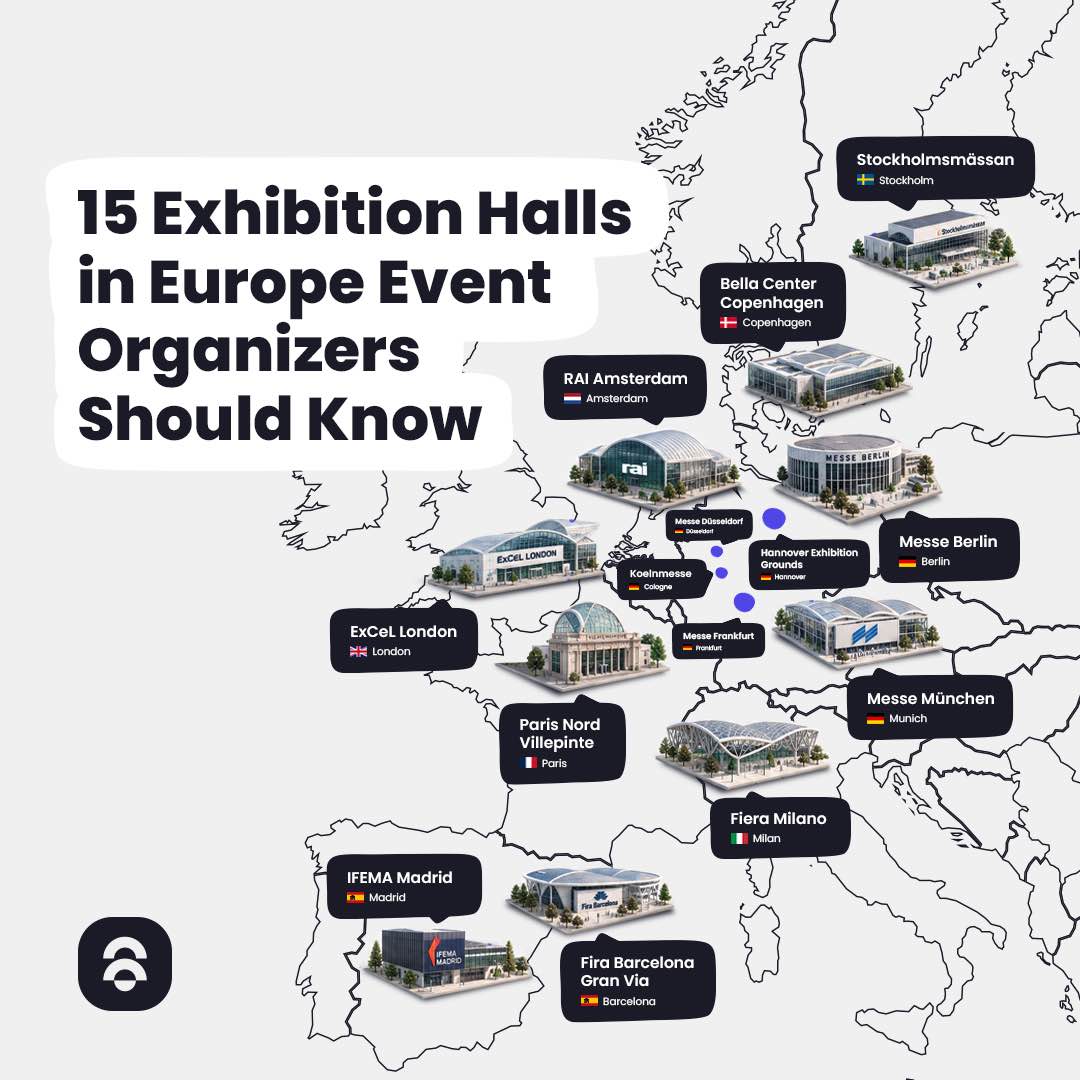
Exhibition halls are one of the key points that can define the entire event experience. While the capacity is important, location, transport connections, flexibility, technology, and nearby accommodation should also be considered when choosing the right venue.
Europe has a lot to offer when it comes to exhibition infrastructure. The European Major Exhibition Centres Association (EMECA), which was founded in 1992, unites 25 leading venues, while Germany alone offers around 3.25 million m² of exhibition hall space across its trade fair locations.
Whether you're planning a large international trade show, corporate exhibition, conference or smaller industry event, these are the top 15 exhibition halls and centres worth knowing.
1. Hannover Exhibition Grounds – Hannover, Germany
The Hannover Exhibition Grounds is one of Europe's biggest names in exhibitions and among the largest and most modern venues in the world, with a total area of approximately 1.4 million m².
However, the exhibition area accounts for 392,453 m² of indoor space - across 24 halls and pavilions and a large convention center - and 58,000 m² of outdoor space.
Aside from the exhibition spaces, the site also offers a variety of restaurants, bistros, and catering services. Plus, there are over 30,000 hotel rooms available nearby.
When it comes to accessibility, the venue's location makes it very easy to get to. It's around 400 metres from Hannover Messe/Laatzen railway station and direct access to 2 motorways. There is also a large parking lot for 39,000 vehicles.
This vast area makes the venue suitable for international trade fairs requiring multiple halls, large exhibitor areas, and extensive logistics infrastructure.
Best for: Large international exhibitions, industrial events and multi-hall trade shows.
2. Messe Frankfurt – Frankfurt, Germany
Messe Frankfurt combines large capacity with excellent international transport connection.
With approximately 400,000 m² of indoor event space across 10 multifunctional halls, plus over 59,500 m² of outdoor area, it's one of the largest exhibition halls in Germany and the world.
Alongside the halls, the venue also provides restaurants, conference facilities, food service areas, and technical infrastructure. Moreover, it offers full event technology, stand construction, and more.
Being located in the city center, the trade fair hall is close to Frankfurt's international airport, the railway network, and around 12,000 hotel rooms within walking distance, making the venue easily accessible for local and international exhibitors and visitors.
Best for: International B2B exhibitions and events with large overseas audiences.
3. Koelnmesse – Cologne, Germany
Koelnmesse offers around 284,000 m² of exhibition space across 11 interconnected halls, 2 congress centres, 1 conference & exhibition center – Confex, and 100,000 m² of outdoor space.
The venue also features multilevel exhibit spaces, further increasing the usable area.
Being located near Köln Messe/Deutz station, Koelnmesse has direct access to ICE train connections to Cologne Hbf and Cologne/Bonn Airport, as well as public transport. Apart from easy access, the venue also boasts many nearby accommodations.
The extensive indoor and outdoor exhibition space of this trade fair center enables it to host events of any size.
Best for: Large exhibitions combining conference, networking and trade-show formats.
4. Messe Düsseldorf – Düsseldorf, Germany
Messe Düsseldorf is one of Europe’s largest and most flexible exhibition venues, offering approximately 262,727 m² of indoor exhibition space, across 18 modern and multifunctional halls, plus 43,000 m² of outdoor area.
Apart from the halls, the venue also features 41 event rooms, additional facilities, and a parking lot for 20,000 vehicles.
In terms of location and accessibility, the venue is close to the city center and the Düsseldorf International Airport, which makes it easily accessible by vehicle and public transport, as well as by air, for foreign guests.
Its extensive halls make it suitable for events involving large stands, demonstrations, machinery, or substantial visitor volumes.
Best for: Large-scale trade shows and international professional exhibitions.
5. Fiera Milano – Milan, Italy
Milan combines international business, fashion, design, and strong transport connections with significant exhibition infrastructure.
Fiera Milano's main exhibition complex provides a total of 753,000 m²—including conference venues, meeting rooms, and other facilities—making it one of the largest exhibition destinations in Europe. The hall space takes up an area of 345,000 m² and is divided into 20 pavilions, each providing an internal area of 17,000 m².
With a vast area, the venue regularly accommodates major international events.
Best for: International exhibitions, design-focused events and major B2B trade fairs.
6. Paris Nord Villepinte – Paris, France
Paris Nord Villepinte is the largest exhibition hall in France, designed for large international exhibitions. It's located near Charles de Gaulle Airport, which makes it attractive for events expecting international audience.
The venue offers approximately 246,000 m² of exhibition space and about 200,000 m² of green space. Its vast area makes it suitable for major international fairs such as SIAL, Maison&Objet, JEC World, and Première Vision exhibition-stands.eu.
Best for: Major international trade fairs and exhibitions with overseas attendees.
7. Paris Expo Porte de Versailles – Paris, France
For organizers who want a major exhibition hall within Paris itself, Porte de Versailles is among the city's best-known options, known for hosting over 200 exhibitions annually.
The complex offers around 220,000 m² of indoor exhibition space across 8 exhibition halls, which makes it one of the largest indoor event venues in Europe. It also includes the Paris Convention Centre, which can accommodate up to around 5,200 people.
The venue's nearby location to the Eiffel Tower, allows for easy accessibility and closeness to various accommodation options.
Best for: Exhibitions combined with conferences, product launches and corporate events.
8. Fira Barcelona Gran Via – Barcelona, Spain
Fira Barcelona Gran Via is one of the largest and most modern exhibition venues in Europe, known for its design, functionality, and sustainability.
The exhibition center provides around 240,000 m² of area across 8 interconnected halls. It also features 45 restaurants and 4,500+ parking spaces.
What makes this exhibition hall recognizable is its advanced technology all over the place and its photovoltaic rooftop, featuring 26,000 solar panels.
Its location, in a new business development area very close to the airport and public transport network, makes it easy to access for local and foreign audiences.
Best for: Technology events, international conferences, and modern B2B exhibitions.
9. IFEMA Madrid – Madrid, Spain
IFEMA Madrid is the largest venue in the city, with an exhibition area of 200,000 m², across 13 halls, a 10,000 m² convention centre, and facilities for events (conference rooms, VIP areas, etc).
Apart from the exhibition area, this trade fair complex features multiple restaurants, around 14,000 parking lots.
Being located in the Spanish capital, it's easily accessible for via metro and bus, for local audience, and plane, for international audience.
Best for: Large-scale business exhibitions, trade fairs, consumer shows, and various international event formats.
10. ExCeL London – London, United Kingdom
Located in London's Royal Docks, ExCeL has become one of the UK's best-known conference and exhibition venues.
Following its expansion, the venue offers around 125,000 m² of event space, making it one of the largest exhibition centers in the UK. The venue features two multifunctional, column-free exhibition halls, alongside conference facilities and breakout spaces.
The center also offers 7 on-site hotels (and 10,000 hotel rooms within 20 minutes), parking for 3,700 cars, plus 1,800 underground spaces.
Located in London, the venue gives attendees extensive options for accommodation, direct transport connections, and activities around the event.
Best for: International conferences, exhibitions and large corporate events.
11. RAI Amsterdam – Amsterdam, Netherlands
RAI Amsterdam is a popular choice for organizers looking for a well-connected European destination without the immense footprint of some German exhibition complexes.
The venue offers something over 110,000 m² of event space across 12 main halls, all fully equipped with advanced audio-visual systems. Apart from the exhibition halls, the venue also features multiple conference rooms, lounges, large and small rooms, and underground parking for over 4,000 cars.
In terms of accessibility, the exhibition center is directly connected to Amsterdam RAI railway station, allowing for access to metro lines, trams, and buses. Plus, it’s only 8 minutes from Amsterdam Airport Schiphol.
Best for: Large-scale exhibitions, technology events, and conferences with international audiences.
12. Messe München – Munich, Germany
Messe München provides approximately 200,000 m² of indoor exhibition space across 18 multifunctional, modern halls equipped with state-of-the-art information technology, and 414,000 m² of outdoor area.
In addition to the halls, the venue also features 50 meeting rooms, 57 breakout rooms, 37 conference rooms, and 27 restaurants and bistros. There’s also parking accommodating over 5,700 vehicles.
Located in a busy German city, the venue has direct connections to the public transport system via U-Bahn, S-Bahn, bus lines, and the A94 motorway.
Best for: Large exhibitions requiring both indoor and outdoor areas, including business events involving machinery, vehicles, and outdoor demonstrations.
13. Messe Berlin – Berlin, Germany
Messe Berlin offers over 160,000 m² of indoor exhibition space across 26 multifunctional halls, and extensive conference and service facilities (restaurants, cafes, and lounges). It also has a vast outdoor space, which totals around 200,000 m² of venue area.
The exhibition center boasts state-of-the-art lighting, electrical, and networking infrastructure. However, it’s best known for its efficient logistics—spacious loading docks and back-of-house areas—ensuring smooth setup and dismantling of exhibitors’ gear. And, of course, there’s well-established public transportation access, with the venue being close to S-Bahn and U-Bahn stations.
Best for: International exhibitions, technology events, and events combining business with city experiences; from small to large-scale events.
14. Bella Center Copenhagen – Copenhagen, Denmark
Bella Center is Denmark’s largest exhibition and conference venue, offering a gross indoor exhibition area of 121,800 m², with 65,000 m² of flexible event space, and a capacity of up to 30,000 guests.
The trade fair center has 2 on-site, fully equipped hotels and offers audio-visual and production services.
In terms of accessibility, the venue has direct metro access to Copenhagen Airport and is connected to local public transport.
Best for: Nordic conferences, corporate exhibitions and international B2B events.
15. Stockholmsmässan – Stockholm, Sweden
Stockholmsmässan is the Nordic region's largest exhibition and congress center, which hosts conferences, exhibitions, meetings, and trade shows throughout the year.
The venue boasts a total area of around 114,000 m², including 70,000 m² of indoor exhibition space across multiple halls, 76 conference and meeting rooms, restaurants, cafés, and other support areas. The exhibition areas are equipped with complete audio-visual technology and can welcome up to 30,000 visitors.
Being located in the heart of Sweden, the venue is easy to reach by train, bus, car, or taxi. It also has a large parking lot for approximately 2,000–4,000 cars.
Best for: Nordic trade fairs, corporate events, conferences, and regional exhibitions of all sizes.
How to Choose the Right Exhibition Hall
The largest venue isn't automatically the best venue.
Before selecting the right exhibition hall, organizers should consider how well the venue fits the event format and the experience they want to create.
Location and accessibility
Consider how easily attendees can reach the venue from airports, train stations, hotels, and the city centre.
For an international event, a slightly smaller venue with excellent flight connections may outperform a much larger venue in a harder-to-reach destination.
Exhibition space and layout
Look beyond total square metres.
Consider:
- Hall dimensions and ceiling height
- Number of halls
- Pillars and structural restrictions
- Breakout and meeting spaces
- Registration areas
- Networking zones
- Catering areas
- Outdoor space
- Loading and exhibitor access
The way people move through the venue can have just as much impact as its total capacity.
Technology infrastructure
Modern exhibitions depend heavily on connectivity.
Reliable Wi-Fi and mobile coverage are important for everything—from event apps and digital agendas to lead retrieval, exhibitor tools, live updates, and attendee networking.
Organizers should understand the venue's infrastructure before building their event technology plan around it.
Check-in and entrance areas
Large exhibitions can generate a lot of attendees' traffic within a short period.
Ask whether the venue has enough space to support your intended registration process, including:
- Self-service check-in
- Badge printing
- Staffed registration desks
- Separate exhibitor or VIP entrances
- Queue management
Technology can accelerate check-in, but the physical entrance still needs to support the expected attendees’ flow.
Exhibitor logistics
Exhibitors may need access several days before attendees arrive.
Check loading schedules, vehicle access, storage, stand-building regulations, delivery procedures and dismantling times before confirming a venue.
Different European venues can have different operational and contractor requirements.
Accommodation and surrounding infrastructure
A successful exhibition doesn't exist only inside the hall.
Nearby hotels, restaurants, public transport, and networking venues can also affect attendees’ experience.
For multi-day international exhibitions, these factors become especially important.
Exhibition Halls Are Becoming More Digital
Modern exhibition venues are no longer large empty spaces filled with stands. Organizers connect the physical venue with a digital event experience.
Attendees can check in digitally, print badges, access interactive agendas, navigate the event, discover exhibitors, schedule meetings, and receive real-time updates from their phones.
Exhibitors can use lead retrieval tools to capture and qualify conversations instead of collecting business cards manually.
For organizers, this creates something especially valuable: visibility into what is actually happening across the event.
Connecting the Physical Venue with Agorify
The exhibition hall provides space. Agorify helps organizers manage the event experience.
With one event platform, organizers can support different parts of the exhibition journey, including:
- Event registration for collecting attendee information before the event.
- Interactive floor plan for easier venue navigation.
- Check-in and badge printing for faster arrivals at the venue.
- Digital agendas for keeping sessions, stages and activities easy to find.
- Event App access for attendees throughout the exhibition.
- AI Matchmaking and Meeting Scheduler tools that help attendees discover relevant connections.
- Lead Retrieval for exhibitors capturing and qualifying leads directly from the exhibition floor.
- Push notifications for communicating schedule changes and important announcements.
- Analytics for understanding attendee activity and event performance.
That combination is especially useful at larger exhibition halls, where thousands of attendees, exhibitors, sessions, and interactions may need simultaneous coordination.
To Wrap Up
Europe offers some of the most impressive exhibition venues in the world, but venue selection should go beyond finding the biggest hall.
Think about how your attendees will arrive, navigate, connect, and interact once they enter the building.
The right venue provides the infrastructure. The right event technology helps turn that infrastructure into a connected experience.
Planning your next exhibition?
Create your event, build your digital agenda, and start managing the attendee experience with Agorify.